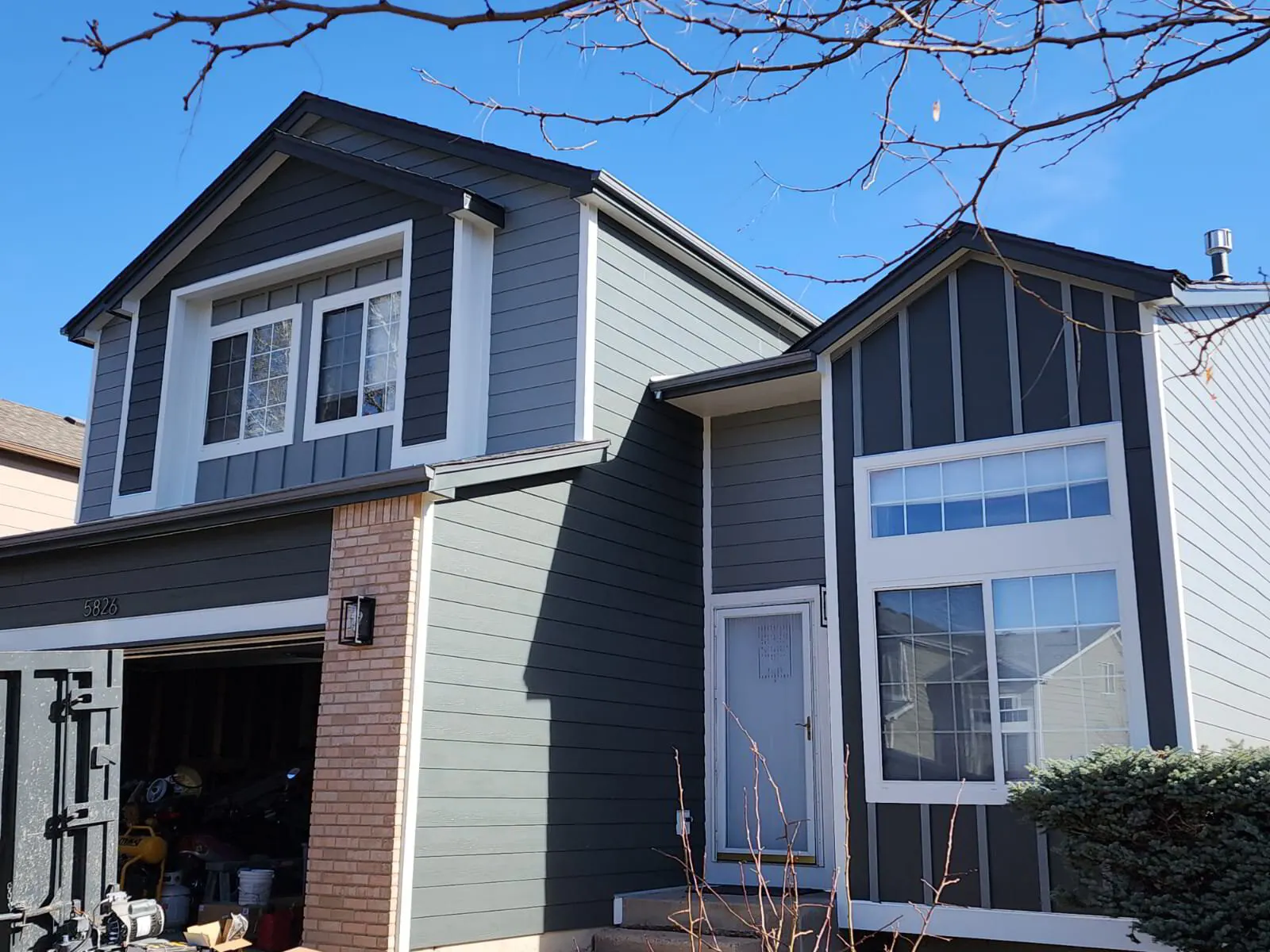
At six thousand feet the sun is stronger, and there is a lot of it. Ultraviolet light breaks down paint and cheaper siding faster than it would at sea level, which is why south and west walls fade, chalk, and crack first. Then come the storms: the Front Range sits in one of the most active hail corridors in the country, and a single summer afternoon can pit, crack, or punch through weak siding.
The swings do the rest. Dry air, a warm afternoon, and a hard freeze by morning make materials expand and contract constantly. Any gap that opens lets in snowmelt, which freezes, widens the gap, and soaks the sheathing behind it. And on the edges of town, where houses back onto open space, wildfire risk is real; what the wall is made of matters.
Good siding, installed over a proper weather barrier with the right flashing and clearances, is what keeps all of that outside. Trim and fascia are part of that same wall: they close the edges, carry water off the corners and roofline, and are usually where rot starts first. That is why we replace them together.